

Chinese President Xi Jinping arrived in North Korea today, making his first visit to the isolated country in seven years in a move aimed at reaffirming Beijing's close ties with Pyongyang and its leader, Kim Jong Un. The Chinese president landed in the capital of North Korea for a rare two-day official visit, according to the Chinese news agency Xinhua. Footage broadcast by state media showed Kim Jong Un and his wife, Ri Sol Ju, welcoming Xi Jinping at the airport.
The Chinese president and his wife, Peng Liyuan, were received with honors, while North Korean children offered them flowers. The streets of Pyongyang were filled with Chinese flags, while huge portraits of Xi Jinping were displayed in central parts of the city, according to official visual material released. The visit marks the Chinese president's first trip abroad for 2026 and comes just weeks after separate meetings he held in Beijing with Russian President Vladimir Putin and US President Donald Trump.
Message of geopolitical power from Beijing
The timing of the visit fits into China's efforts to project its role as a global mediator in a period of intense geopolitical shifts. At the same time, the trip sends a clear message that, despite the significant strengthening of relations between North Korea and Russia in recent years, China remains Pyongyang's most important economic and diplomatic partner.
In a letter to North Korean media before the visit, Xi Jinping emphasized that: "Regardless of the changes in the times and developments in the international situation, the traditional friendship between China and North Korea remains unbreakable, lasting, and continues to radiate vitality." For North Korea, the visit is yet another episode in its ongoing effort to balance its relations between Moscow and Beijing, as it seeks military and economic benefits from both powers without being overly dependent on either.
Missile and nuclear programs in the spotlight
One day before Xi Jinping's arrival, North Korean state media reported that Kim Jong Un visited a large defense industry ammunition plant, where he was briefed on the expansion of production capacity for ballistic and cruise missiles. Last week, the North Korean leader had visited a facility producing military-grade nuclear material, stating that the country plans to strengthen its nuclear forces at an "exponential rate."
It remains unclear whether North Korea's nuclear program will be a key topic of conversation between the two leaders. Beijing views Pyongyang's nuclear ambitions with caution, as it believes they increase the US military presence in the region and could cause destabilization on China's borders. On the other hand, the Chinese leadership views North Korea as part of a wider network of countries that act as a counterbalance to American influence.
Coldness with Beijing, approach with Moscow
Visits by foreign leaders to North Korea are extremely rare. Xi Jinping last visited the country in 2019, while Vladimir Putin was in Pyongyang in 2024, when Russia and North Korea signed a mutual defense assistance agreement. In recent years, relations between Beijing and Pyongyang had shown signs of coldness.
The restrictive measures of the Covid-19 pandemic limited contacts between the two countries, and subsequently, North Korea moved closer to Russia, sending—according to Western estimates—thousands of soldiers to support Russian operations in Ukraine. Xi Jinping's visit is considered an opportunity for rapprochement and the upgrading of relations, at a time when international balances are shifting due to the changes brought about by the foreign policy of the Trump administration.
The Xi–Kim–Putin triangle
The last meeting between Xi Jinping and Kim Jong Un took place in September in Beijing, in the context of a major military parade. The North Korean leader was sitting next to the Chinese president, while Vladimir Putin was also present, in an image interpreted as a display of unity among the three leaders. The current visit coincides with the 65th anniversary of the signing of the Treaty of Friendship, Cooperation, and Mutual Assistance between China and North Korea in 1961, which remains the only mutual defense treaty that China maintains.
South Korea's reactions and the Trump factor
Relations between North and South Korea have deteriorated significantly in recent years. South Korean President Lee Jae Myung, commenting on Xi Jinping's visit, stated that ties between Russia and North Korea are constantly strengthening, while the gap between the two Koreas is widening. However, he emphasized that Seoul must continue to pursue dialogue. At the same time, Donald Trump has repeatedly expressed interest in restarting high-level talks with Pyongyang.
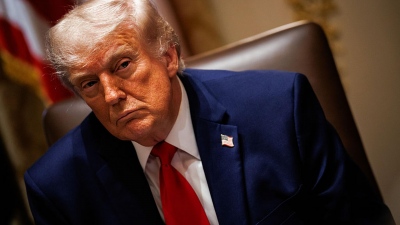
During his first term, he had met three times with Kim Jong Un in an effort to end the North Korean nuclear program, which ultimately did not yield the expected results. Kim Jong Un stated last autumn that he would be willing to meet Donald Trump again, but only if the United States abandons the goal of the complete denuclearization of North Korea. The issue of the Korean Peninsula was also on the agenda of talks between Xi Jinping and Donald Trump during the American president's visit to Beijing last May, confirming that North Korea remains a key issue for balances in Asia and the international geopolitical scene.
www.bankingnews.gr











Σχόλια αναγνωστών